Island Hotel Booking Plans: A Strategic Guide to Remote Hospitality
The architecture of a remote island stay is increasingly defined by the tension between extreme isolation and the expectation of seamless industrial-grade luxury. Unlike mainland hospitality, where the surrounding infrastructure is an assumed baseline, an island resort functions as a sovereign entity—a closed-loop system responsible for its own power, water, waste, and supply chain. When travelers or developers discuss the structural underpinnings of these stays, they are essentially looking at a complex logistical blueprint that must withstand the corrosive realities of a maritime environment while maintaining a facade of effortless tranquility.
Securing a position within these high-tier ecosystems involves more than a simple transaction; it requires an alignment with the resort’s operational cadence. The most successful models of remote lodging have moved away from high-volume occupancy toward a more disciplined approach to resource management. This shift is driven by the realization that the primary asset—the island’s pristine ecology—is also its most fragile liability.
To analyze the current landscape of offshore hospitality, one must look past the visual marketing of turquoise lagoons and interrogate the mechanical realities that make such experiences possible. The friction of distance dictates every variable, from the landed cost of fresh produce to the redundancy of backup desalination units. This article provides a comprehensive interrogation of the strategic variables that define a world-class island institution, offering a definitive roadmap for understanding the structural and economic forces at play in remote destination management.
Island hotel booking plans

When the industry refers to island hotel booking plans, the term encompasses far more than a reservation on a calendar; it refers to a comprehensive strategic agreement between the guest and the resort’s operational limits. A common misunderstanding among modern travelers is the belief that a premium price point guarantees the same logistical flexibility found in a major metropolitan hub. In reality, a plan in a remote island context is a commitment to a specific logistical window, often dictated by tide schedules, seaplane weight limits, and pre-allocated supply shipments.
Oversimplification risks ignoring the “carrying capacity” of the destination. If a resort over-commits its occupancy beyond its desalination or sewage treatment capacity, the entire guest experience collapses—not because of a failure in service, but because of a failure in the underlying engineering. Thus, the most robust plans are those that prioritize low density and long-term ecological stability over immediate revenue maximization.
The guest should ideally never perceive the struggle to maintain a climate-controlled sanctuary in a salt-saturated atmosphere. A plan that accounts for the “Logistical Friction” of the location will include contingencies for delayed barges or equipment failure, ensuring that the guest’s perception of isolation remains a curated choice rather than a forced consequence of operational breakdown.
Deep Contextual Background
The historical trajectory of island hospitality has transitioned through three distinct phases of development. The early 20th century was defined by the “Hard Outpost” model—utilitarian structures built for trade or colonial administration, where comfort was a secondary concern to durability.
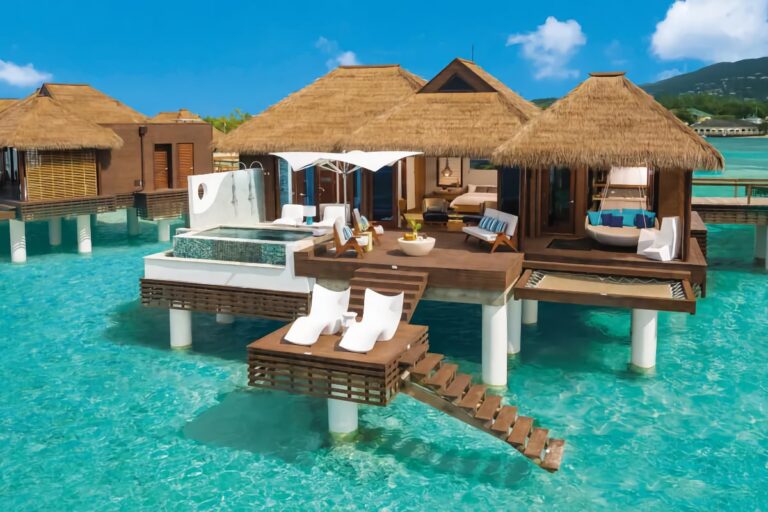
The post-war era ushered in the “Fortress Luxury” phase, enabled by the democratization of aviation and the proliferation of diesel power. This period saw the construction of massive resorts that attempted to overwrite the island environment with imported aesthetics and high-energy cooling systems. It was during this era that the first overwater bungalows appeared, fundamentally changing the relationship between the structure and the sea, though often at the cost of local reef health due to primitive piling and dredging techniques.
We are currently witnessing the “Regenerative Era,” where the focus has shifted toward integrated, self-sustaining ecosystems. Modern hospitality developers now view the island as a partner rather than a backdrop. This involves the use of modular construction to minimize site impact, the integration of massive renewable energy arrays, and the implementation of circular economy principles. The goal is no longer just to minimize harm, but to actively contribute to the restoration of the local biodiversity, a requirement that is now a central pillar of any premier offshore development strategy.
Conceptual Frameworks and Mental Models
To evaluate the efficacy of remote lodging, several conceptual frameworks can be applied to understand the unique pressures of the environment.
The Sovereign Utility Framework
This model views the island resort as a micro-state. The quality of a resort’s “booking plan” is directly proportional to its ability to manage these utilities without interruption.
The Friction-Distance Ratio
This mental model measures the difficulty of maintaining a high-tier standard relative to the distance from the nearest industrial hub. As the distance increases, the “cost of comfort” rises exponentially. A property that masters this ratio does so through radical local sourcing and extreme technical redundancy.
The Biophilic Resilience Model
This framework assesses whether the architecture works with the environment (using prevailing winds and thermal mass) or against it (using excessive HVAC). In an island context, a resilient design is one that can remain habitable even in the event of a total power failure, relying on vernacular wisdom to maintain airflow and cooling.
Key Categories and Variations
Island lodging options are categorized by their topographical constraints and their proximity to supply chains.
| Category | Primary Focus | Key Trade-off | Ideal Use Case |
| Private Sanctuary | Absolute Privacy | High operational cost / isolation | High-profile seclusion |
| Eco-Research Outpost | Biodiversity / Education | Reduced luxury / High education | Science-centric travel |
| Atoll Integrated Resort | Lagoon Access | High ecosystem impact / Fragility | Family or group stays |
| Volcanic Highlands | Slopes / Microclimates | Access difficulty / Erosion risk | Adventure and privacy |
| Heritage Boutique | Cultural Immersion | Limited modern amenities | Slow travel enthusiasts |
Decision Logic for Selection
Choosing between these categories depends on the “Primary Constraint” of the stay. If the constraint is time, the integrated resort near an aviation hub is optimal. If the constraint is ecological integrity, the eco-research outpost or private sanctuary offers a more authentic alignment with the destination’s natural state.
Detailed Real-World Scenarios
Scenario A: The Remote Supply Chain Break
In a scenario where a resort is 600 miles from the nearest mainland port, a delay in the monthly barge can lead to a “Service Degradation.” A robust plan will have 45 days of dry storage and on-site hydroponics to ensure that the culinary standards remain consistent, regardless of external logistics.
Scenario B: The “100-Year” Storm Event
Islands in the hurricane or typhoon belts must be designed for “Passive Survivability.” This means the structures can withstand extreme wind speeds without shattering the guest experience. The failure mode in this scenario is often not the wind itself, but the flooding of the engine room, which houses the island’s life-support systems.
Scenario C: The Coral Bleaching Crisis
A resort built primarily for its house reef faces an existential threat during a bleaching event. The most successful models in this scenario are those that have diversified their offerings into “Upland Experiences” (hiking, birdwatching, cultural tours), ensuring the asset remains viable even as the marine environment fluctuates.
Planning, Cost, and Resource Dynamics
The financial architecture of island stays is governed by the “Remoteness Premium.” Every item, from a liter of milk to a solar panel, carries a landed cost that reflects the complexity of its transport.
Resource Cost Variance Table
| Expense Category | Mainland Baseline | Island Equivalent | Variance Driver |
| Electricity (kWh) | $0.15 | $0.70 – $1.20 | Fuel barge vs. Battery CAPEX |
| Water (m3) | $2.00 | $12.00 – $18.00 | RO membrane maintenance |
| Logistics (Freight) | 5% of Value | 25% – 40% of Value | Handling and marine transport |
| Waste Disposal | $100/ton | $600+/ton | Exporting refuse to mainland |
The “Opportunity Cost” of island development is often found in the “Construction Window.” A delay of one month in the dry season can push a project back by a full year, as marine conditions may become too treacherous for heavy equipment transport during the monsoon or hurricane season.
Tools, Strategies, and Support Systems
Maintaining the integrity of a remote stay requires a specialized suite of technologies that transcend standard hospitality tools.
-
Reverse Osmosis (RO) Desalination: The critical infrastructure for any island stay. The best systems utilize energy recovery devices to recapture the high-pressure energy of the brine stream.
-
Decentralized Microgrids: Combining solar PV, battery storage, and smart-load management to minimize reliance on diesel generators.
-
Greywater Recycling: Treating laundry and shower water for use in sub-surface irrigation, protecting the island’s limited freshwater lens.
-
Satellite-Linked Logistics: Real-time tracking of every supply vessel and seaplane to optimize inventory levels and prevent stock-outs.
-
Modular Pre-fabrication: Building luxury villas in a controlled mainland factory to ensure precision seals against humidity before shipping them as complete units.
-
AI-Driven Predictive Maintenance: Monitoring the vibration and heat signatures of desalination pumps and generators to fix them before they fail.
Risk Landscape and Failure Modes
The primary risk in island hospitality is “Systemic Fragility”—where multiple small, independent failures compound into a total operational shutdown.
-
Corrosion Fatigue: Salt air is an unrelenting corrosive agent. Using 304-grade stainless steel instead of 316 marine-grade can lead to structural failures within 36 months in tropical settings.
-
Invasive Species Introduction: A single stowaway rat on a cargo barge can decimate local bird populations, destroying the island’s ecological appeal.
-
Human Capital Attrition: The “Island Fever” effect. High turnover among skilled MEP (Mechanical, Electrical, Plumbing) engineers can leave a resort unable to maintain its complex infrastructure.
-
Sovereign Risk: Many islands are in jurisdictions where leasehold laws or environmental regulations can shift abruptly, jeopardizing long-term investment.
Governance, Maintenance, and Long-Term Adaptation
The longevity of an island asset is determined by its “Maintenance Culture.” On a remote island, maintenance is not a periodic task; it is a continuous war against entropy.
The Tiered Maintenance Checklist
-
Daily: Visual inspection of desalination membranes; solar panel cleaning; monitoring of battery state-of-charge.
-
Monthly: Testing of backup generators under load; inspection of marine moorings for corrosion.
-
Quarterly: Structural audit of “wet” buildings; monitoring of the coastline for sand erosion or accretion.
-
Annually: Full MEP overhaul; assessment of the “Living Seawall” or reef health.
Adaptation is the final frontier. As sea levels rise, “top” plans now incorporate “elevated ground floors” and “floating infrastructure” that can be adjusted as the coastline shifts, ensuring the property remains viable for decades.
Measurement, Tracking, and Evaluation
How do we measure the success of an island stay’s operational plan?
-
Leading Indicators: Resource consumption per occupied room; staff retention rates in technical roles; preventative maintenance completion percentages.
-
Lagging Indicators: Net Promoter Score (NPS); average daily rate (ADR) relative to regional competitors; yield per square meter of developed land.
-
Qualitative Signals: The “Footprint of Silence”—the resort’s ability to operate its heavy machinery without audible or visual intrusion on the guest experience.
Documentation Standards
-
The Resource Ledger: A transparent daily record of water and power production vs. consumption.
-
The Biodiversity Index: An annual report on the health of local flora and fauna, often used to justify conservation fees.
-
The Sinking Fund Audit: Ensuring that capital is being set aside for the inevitable 10-year overhaul of marine infrastructure.
Common Misconceptions and Oversimplifications
-
Myth: “Eco-friendly” means “Less Luxurious.” Modern sustainable technology (like silent geothermal cooling) is often far more luxurious than noisy, traditional mechanical systems.
-
Myth: Overwater bungalows are the only “high-end” option. Many ultra-wealthy travelers now prefer upland villas for their superior privacy and natural cooling.
-
Myth: All-inclusive means lower quality. In a remote setting, an all-inclusive model often ensures better quality control and reduced logistical stress for both the guest and the resort.
-
Myth: Proximity to the mainland is always better. True isolation is a finite commodity; the further the island, the higher its long-term value as an “unplugged” sanctuary.
Conclusion
The architecture of island hotel booking plans is a study in the balance between human ambition and the uncompromising realities of the maritime world. As the global travel industry continues to evolve, the properties that thrive will be those that view themselves not as landlords of the ocean, but as temporary stewards of its most fragile outposts. Achieving excellence in remote hospitality requires a shift from “building on an island” to “building with the island,” ensuring that the destination remains as vibrant in fifty years as it is on opening day. Achieving this requires patience, editorial judgment, and an unwavering commitment to structural and ecological honesty.