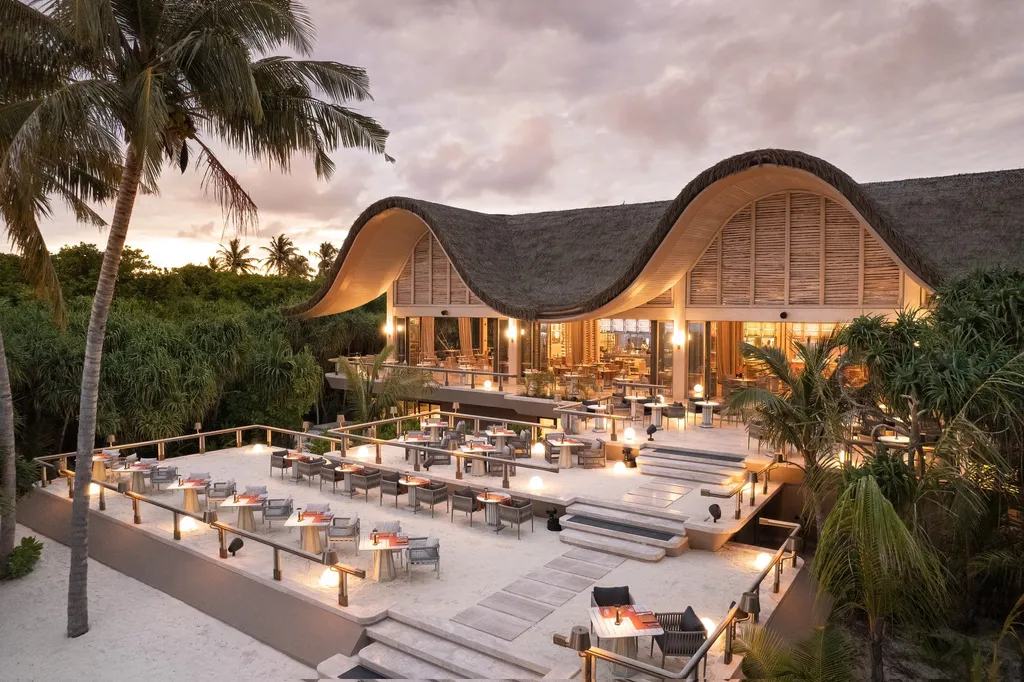
Top Island Hotel Plans: A Master Guide to Luxury Development
The development of remote island destinations has transitioned from a niche architectural pursuit into a complex intersection of environmental engineering, luxury psychology, and logistics. Unlike mainland hospitality, where infrastructure is often a given, island projects require a ground-up synthesis of self-sustainability and high-end aesthetic appeal. The planning phase is no longer just about aesthetics; it is a rigorous exercise in mitigating the friction between human comfort and ecological fragility.
Current shifts in the global travel market have intensified the demand for “isolation with connectivity.” This paradox defines the modern era of offshore development, where the physical blueprint must account for extreme weather resilience while maintaining an atmosphere of effortless tranquility. The scope of such projects extends beyond the shoreline, involving complex maritime legalities, coral reef conservation protocols, and the intricate management of a closed-loop resource system.
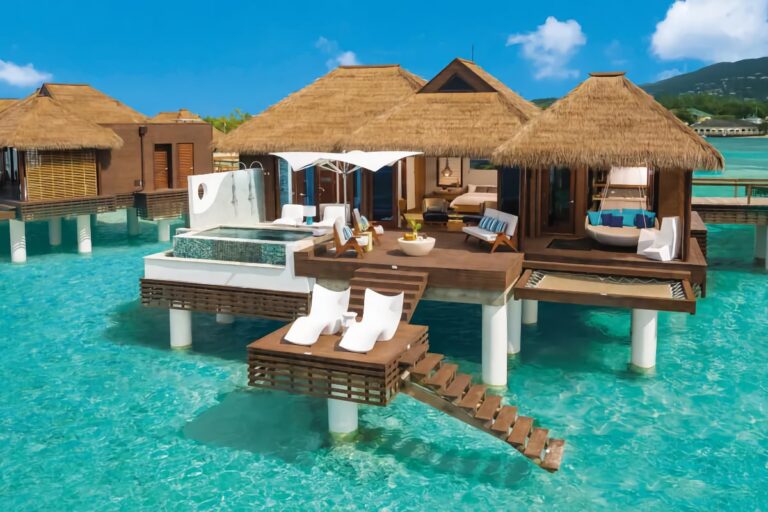
Approaching this subject requires looking past the glossy imagery of overwater bungalows to examine the structural and strategic scaffolding that makes such properties viable. This article examines the multi-layered realities of modern island development, focusing on the strategic underpinnings that differentiate a standard resort from a definitive global landmark.
Understanding “top island hotel plans”
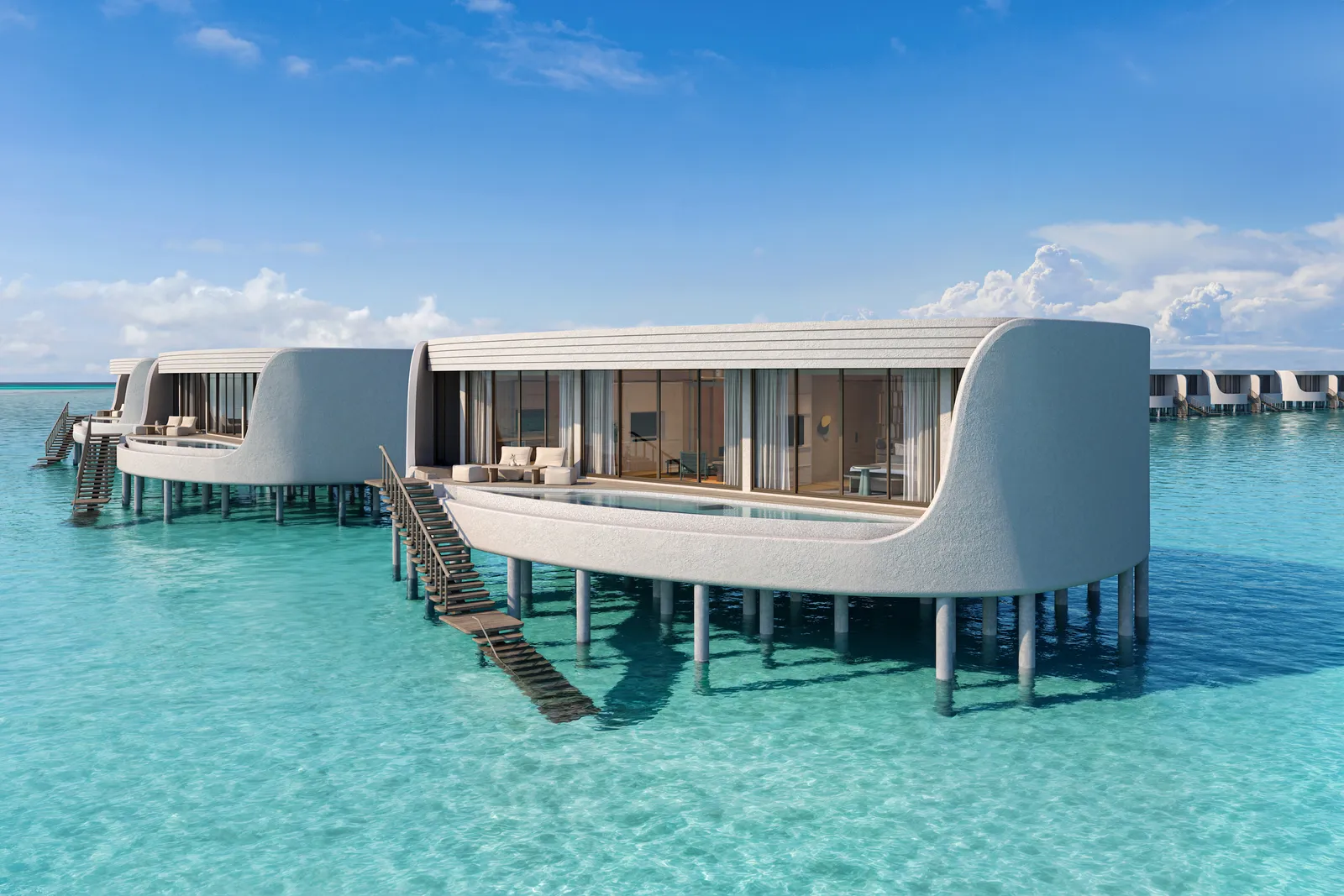
When discussing top island hotel plans, the conversation frequently collapses into a narrow focus on architectural style or interior design. However, a “plan” in this professional context is a comprehensive technical and strategic document that harmonizes three conflicting forces: site-specific environmental constraints, guest experience journey mapping, and the industrial-grade utility requirements of a remote location.
A common misunderstanding is that high-end island plans are simply scaled-up versions of coastal luxury hotels. In reality, the “top” tier of these plans is distinguished by their invisibility. The guest should never see the desalination plant, the massive battery arrays for solar storage, or the complex waste management systems that prevent nitrogen runoff into the surrounding lagoon.
Another oversimplification involves the assumption that “top” plans are synonymous with maximum footprint. Contemporary excellence in island planning is moving toward “low-impact, high-value” models. This means the most successful plans often involve fewer keys (rooms) but higher square footage per guest and a more significant investment in restorative ecology. Failure to account for the “carrying capacity” of the island—the number of people the ecosystem can support without degradation—is a hallmark of a flawed plan, regardless of how luxurious the initial renderings appear.
Historical and Systemic Evolution
The lineage of island hospitality can be traced back to the post-war era, where improved aviation technology made remote archipelagos accessible to the Western elite. Early developments were often colonial in style, relying on imported materials and ignoring local climatic wisdom. These projects were “fortress-like,” creating a hard barrier between the guest and the natural environment.
By the 1970s and 80s, the “Bora Bora” model introduced the overwater bungalow, a revolutionary shift in top island hotel plans. This moved the development off the land and onto the water, fundamentally changing how architects viewed site boundaries. However, this era also saw significant ecological damage as dredging and piling techniques were still primitive.
The 21st-century shift has been toward “biophilic” and “regenerative” design. Modern plans are no longer just about minimizing harm; they are designed to improve the environment they occupy. We see this in the integration of “living” seawalls, solar-harvesting glass, and modular construction techniques that allow buildings to be assembled with minimal site disturbance. The evolution is moving away from the island as a “backdrop” and toward the island as a “partner” in the guest experience.
Conceptual Frameworks and Mental Models
To analyze the efficacy of island development, one must apply specific frameworks that account for the unique pressures of the environment.
The Closed-Loop Utility Model
Every island is essentially a space station on water. This model dictates that all inputs (energy, water, food) and outputs (waste, heat, sewage) must be managed within a finite boundary. A top-tier plan prioritizes the “back of house” energy efficiency as highly as the “front of house” aesthetics.
The Resilience-vs-Aesthetic Trade-off
There is a constant tension between wanting large, floor-to-ceiling glass windows for views and the need for structural integrity against Category 5 hurricanes or typhoons. The mental model here is “defensive luxury”—designing components that look delicate but possess industrial-strength durability.
The Logistics-First Architecture
In remote settings, the architecture is often dictated by what can be shipped on a barge or flown in a cargo plane. Prefabricated modularity is not a cost-saving measure here; it is a logistical necessity. The most successful plans design around the dimensions of a standard shipping container or the lifting capacity of a specific crane.
Key Categories and Variations in Island Planning
Island hotels are not a monolith. The strategy changes based on the topography (volcanic vs. coral atoll), the climate, and the target market.
| Category | Primary Focus | Key Trade-off |
| Private Sanctuary | Absolute Privacy / Low Density | High operational cost per guest |
| Eco-Regenerative | Biodiversity / Education | Higher initial CAPEX for green tech |
| Overwater Integrated | Lagoon Access / Direct Ocean View | Complex marine engineering / High maintenance |
| Adventure/Remote | Accessibility / Unique Geography | High logistics risk / Limited supply chain |
| Boutique Heritage | Cultural Context / Local Materials | Constraints on modern amenity integration |
Decision Logic: Selecting the Right Path
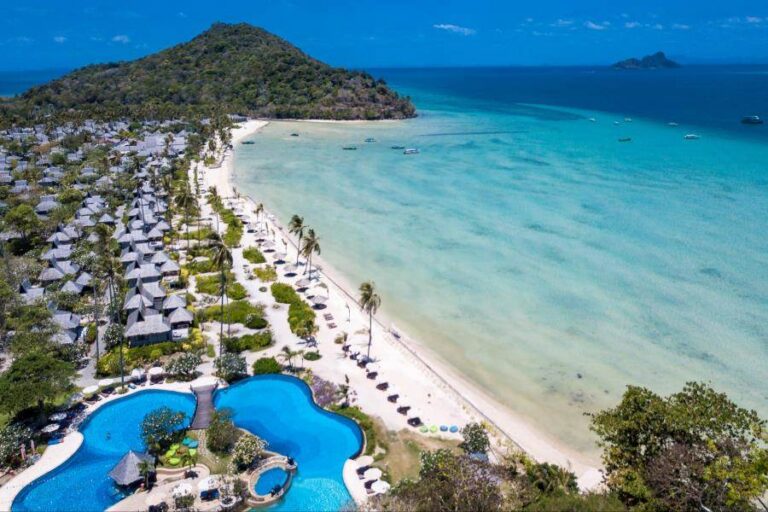
Choosing between these categories depends heavily on the “Environmental DNA” of the site. A flat coral atoll in the Maldives demands a different structural logic (piling and water-based utilities) than a mountainous island in the Seychelles (gravity-fed water systems and slope-stabilization architecture).
Detailed Real-World Scenarios
Scenario A: The Remote Atoll
In a scenario where an atoll is 500 miles from the nearest supply hub, the plan must include a dedicated staff village that functions as a small town, complete with medical facilities and recreation. The “failure mode” here is supply chain interruption. If the barge is delayed by a storm, the resort must have 30 days of autonomy.
Scenario B: The Post-Industrial Private Island
Transforming a former coconut plantation or industrial site requires significant soil remediation. The planning here focuses on “rewilding.” The second-order effect of reintroducing native flora is often an explosion in local bird and marine life, which becomes the primary marketing draw.
Scenario C: High-Density Luxury
In archipelagos like the Caribbean, where islands are closer together, the plan might focus on “inter-island synergy,” allowing guests to use facilities at sister properties. This reduces the need for every island to have every amenity, but it increases the complexity of maritime guest transport.
Planning, Cost, and Resource Dynamics
The financial architecture of top island hotel plans is characterized by a “remoteness premium.” Every item, from a bag of cement to a bottle of vintage wine, carries a significant “landed cost.”
| Expense Category | Typical % of CAPEX | Variability Factors |
| Infrastructure (Water/Power) | 25-35% | Distance from mainland, renewable targets |
| Marine Engineering | 15-20% | Seabed composition, tide variance |
| Logistics & Transport | 10-15% | Fuel prices, seasonal weather windows |
| Structure & Finishes | 30-40% | Material choice (imported vs. local) |
The opportunity cost of delay is the most significant hidden expense. A six-month delay due to a missed monsoon window can result in millions of dollars in lost revenue and escalating debt service.
Tools, Strategies, and Support Systems
Successful execution relies on a specialized toolkit that transcends standard construction.
-
BIM (Building Information Modeling): Used to simulate how ocean salt and humidity will degrade specific materials over 20 years.
-
Modular Pre-Fabrication: Building components in a controlled factory environment to ensure quality and reduce on-site waste.
-
AI-Driven Power Management: Systems that balance solar input, battery storage, and diesel backup in real-time.
-
Desalination Heat Recovery: Using the heat byproduct of water makers to provide hot water for guest villas.
-
Hydrographic Surveying: Precise mapping of the seabed to ensure docks and overwater structures don’t crush coral colonies.
Risk Landscape and Failure Modes
The primary risk in island development is “systemic fragility.” In a city, if a transformer blows, the utility company fixes it. On an island, you are the utility company.
-
Corrosion Fatigue: Salt air is an unrelenting corrosive agent. Using standard grade steel instead of 316 marine-grade stainless steel is a common planning failure that leads to structural issues within five years.
-
Invasive Species Introduction: Bringing in ornamental plants can accidentally introduce insects or fungi that decimate the native ecosystem.
-
Human Capital Flight: High staff turnover due to “island fever” can lead to a collapse in service standards, which is fatal for luxury properties.
Governance, Maintenance, and Long-Term Adaptation
A plan is not a static document; it is a living governance framework. Top island hotel plans include a “Maintenance & Life Cycle Manual” that dictates 5, 10, and 20-year reinvestment cycles.
The Layered Maintenance Checklist:
-
Monthly: Desalination membrane cleaning; Solar panel debris removal.
-
Quarterly: Marine piling inspection for wood-boring organisms or concrete spalling.
-
Annually: Beach nourishment and sand movement analysis.
-
Decadal: Full MEP (Mechanical, Electrical, Plumbing) overhaul and soft-goods replacement.
Adaptation is the final frontier. As sea levels rise, “top” plans now incorporate “elevated ground floors” and “floating infrastructure” that can be adjusted as the coastline changes.
Measurement, Tracking, and Evaluation
How do you measure the success of a plan once it is operational?
-
Leading Indicators: Resource consumption per occupied room; staff retention rates; preventative maintenance completion percentages.
-
Lagging Indicators: Net Promoter Score (NPS); average daily rate (ADR); yield per square meter of developed land.
-
Qualitative Signals: Biodiversity counts (is the reef getting healthier?); local community integration levels.
Documentation Examples:
-
The “Daily Load” Sheet: Monitoring the island’s self-sufficiency ratio (Renewable vs. Fossil Fuel).
-
The “Salt Log”: Recording the rate of metal oxidation in various zones of the resort to adjust future material specs.
Common Misconceptions and Oversimplifications
-
Myth 1: “Eco-friendly” means “Less Luxurious.” Modern sustainable tech often provides a quieter, more comfortable environment (e.g., silent electric boats vs. noisy outboards).
-
Myth 2: Overwater bungalows are the only “high-end” option. Many ultra-wealthy guests now prefer “jungle-shrouded” land villas for better privacy and thermal cooling.
-
Myth 3: Local materials are always cheaper. Shipping local stone from a nearby island might actually cost more than shipping standardized timber from a global hub due to lack of local infrastructure.
Conclusion
The creation of top island hotel plans is an exercise in restraint and foresight. It is the art of building something that feels like it has always been there, while engineered with the precision of a modern aircraft. As the world moves toward a more conscious form of travel, the most successful island developments will be those that view themselves not as landlords of the ocean, but as temporary stewards of its most fragile and beautiful outposts. Success in this field requires a shift from “building on an island” to “building with the island,” ensuring that the destination remains as viable in fifty years as it is on opening day.